Councils to store nuclear waste in return for cash

Juliette Jowit, environment editor The Observer, Sunday June 8 2008

Councils will be asked to store nuclear waste in deep underground vaults in return for government investment in jobs, road improvements and health screening, under plans to be announced this week.

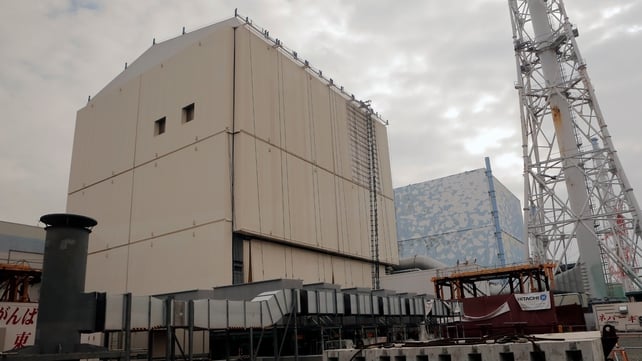
Copeland council in Cumbria confirmed it was planning to put its name forward, a move seen as inevitable because most of the temporary waste is stored at the Sellafield reprocessing plant and the industry accounts for more than half of jobs in the area.

Elaine Woodburn, the council’s Labour leader, said that if a safe site was found and there was community support, it would ask the government for an ‘endowment’ for the community. ‘A repository [would] be here for thousands of years. We can’t ask for projects that will last 50 or 100 years because that would be a disservice to future generations,’ said Woodburn. ‘But the most important thing is making sure it could safely be located here.’

Last year, David Smythe, emeritus professor of geophysics at the University of Glasgow, said the area around Sellafield had ‘no suitable rocks’ for nuclear storage. However, the British Geological Survey, which will assess all suggested sites, said that latest research suggested that 40 to 60 per cent of Britain was suitable to store reactor waste, including much of the area around Sellafield.

The policy of storing radioactive residue in deep geological burial chambers and asking councils to volunteer sites was proposed by the government’s committee on radioactive waste management and backed by a public consultation. Ministers plan to publish their long-awaited white paper on nuclear waste detailing these proposals on Thursday.


Somethings happening here today
A show of strength with your boy’s brigade and,
I’m so happy and you’re so kind
You want more money - of course I don’t mind
To buy nuclear textbooks for atomic crimes

And the public gets what the public wants
But I want nothing this society’s got -
I’m going underground - the jam

the irish independent writes

THE massive nuclear complex at Sellafield is “in crisis” and holds the world’s biggest stockpile of spent nuclear fuel which has the potential to be “more dangerous” than the Chernobyl reactor, a new report claims.

And the UK is unlikely to meet its international commitments to reduce radioactive discharges into the Irish Sea because the plant is not working properly.

The report — “Voodoo Economics and the Doomed Nuclear Renaissance” commissioned by Friends of the Earth — says the deadline for closing the reprocessing facility has been abandoned and the plant will remain open until 2015.

more

the report “Voodoo Economics and the Doomed Nuclear Renaissance” is here in pdf

Summary

This Friends of the Earth research paper by Paul Brown, former environment correspondent of the Guardian, exposes how badly the nuclear industry has performed over its entire 50 years of unfulfilled promises, and the already escalating bill to the taxpayer. It takes its name “Voodoo Economics” from the term coined by George Bush Snr to describe Ronald Reagan’s economic policy because it promised to lower taxes and increase revenues at the same time. This term has subsequently been used to refer to the use of economics based on contradictory ideas and gobbledegook/hocus pocus.

The economics of new nuclear power stations for the UK do not add up. It is not possible to achieve what the Government says it will do - build a new generation of nuclear stations in England without public subsidy.

New build will not be possible without large sums of taxpayers’ money being pledged, and extending the unlimited guarantees to underwrite all the debts of the existing and future nuclear industry.

Rob Edwards writes in the guardian

Rising to four floors at the sprawling Sellafield complex on the Cumbrian coast, it is probably one of the biggest technical and economic disasters in the history of the British nuclear industry. For an industry with more than its fair share of mishaps, that is saying something.

The plant was originally meant to process 120 tonnes of MOX fuel a year, but it has yet to manage even three tonnes a year. As the Guardian reported in February, a grand total of only 5.2 tonnes have been produced in the six-year commissioning phase from 2001 to 2007.

more

[belfast telegraph reports] The SDLP today reiterated its call for the closure of Sellafield after its owners admitted radioactive liquid waste had leaked.

Officials said the effluent - mainly water with a low level of radioactivity - spilled from the nuclear plant’s holding tanks into a concrete room designed to contain overflows.  more

[updated]

Meanwhile at an Irish Government department (led by anti Sellafield and green party leader / minister for the environment John Gormley)  officials said they were looking into the latest incident and added that it was a “relatively minor incident” and had no safety implications for Ireland.

this was reported in the Irish Independent March 27th by Patricia McDonagh

Leaks have implications. The matter of the fact that the material will not reach Ireland is not the argument. THE SAFETY RECORD AT SELLAFIELD the LIES and the fact THOSE PEOPLE ARE THERE TO PROTECT DANGEROUS & DEADLY MATERIALS and I have no faith in them being able to protect when these “small” leaks happen makes me loose some sleep at night.

John get on a boat & train to London and sort it out - don’t accept “relatively minor incident” from your department - you and your advisers know better.

According to the Times Online - Sellafield, home of the world’s first civil nuclear reactor, is being considered as the site for a new nuclear reactor by EDF, the French nuclear power giant.

Amec, the engineering group, is likely to work with EDF if Sellafield is chosen after a round of site investigations, which includes a government strategic site study.

Amec has been setting out the case for new nuclear reactors at Sellafield in Cumbria to a group of council, regional development and business interests to win round public opinion.

Nuclear has been part of the Cumbrian economy and landscape since 1947, when work began on the Windscale reactors. The industry was plunged into controversy in 1957 when fire closed the reactors. [more Times Online]

www.stop-wylfa.org

What a field-day for the heat
A thousand people in the street
Singing songs and carrying signs
Mostly say, hooray for our side

The problem of radioactive waste remains unsolved. All reactors create deadly by-products that must be isolated for centuries. These wastes will have to be moved throughout the nation on trucks and trains, which could themselves have accidents and become terror and proliferation targets. There is no storage site even planned for the wastes that would come from new reactors. The controversial dump under construction at Yucca Mountain in Nevada, which may never open, cannot handle even the waste from reactors already in existence. sign the petition

[BBC 5/10/2007] Fifty years ago, on the night of 10 October 1957, Britain was on the brink of an unprecedented nuclear tragedy.

A fire ripped through the radioactive materials in the core of Windscale, Britain’s first nuclear reactor.

Tom Tuohy, the deputy general manager at the site, led the team faced with dealing with a nightmare no-one had thought possible.

“Mankind had never faced a situation like this; there’s no-one to give you any advice,” he said. more.

from the low level radiation campaign site

Government records altered in cover-up

Winds over Windscale 1957:
Changing the name to Sellafield was not the only rewrite

The 1957 reactor fire at Windscale was possibly the most serious nuclear accident to occur outside the Soviet Union. Large amounts of assorted radio-isotopes were released. Where did they go, and who was affected? The fire began at midnight on 9th October and was finally brought under control on the 12th. Radioactivity in the plume from the later part of the event was tracked south east across England and into Europe. But what happened in the early part? Accounts of the wind direction differ. Reports at the time said that it was blowing out to sea (1). This is supported by a meteorological analysis (2) showing a cold front lying NE to SW across the Irish Sea from Galloway to the Isle of Man and beyond to Dublin. Accompanied by heavy rain it was moving eastwards; light winds were blowing towards it.

But in 1974 Roger Clarke (now the Director of NRPB) disagreed. He says (3) that winds were from the NW throughout, blowing the radiation inland. Thus there could be no significant dose to Ireland or the Isle of Man.

LLRC went to the Meteorological Office Archives in Bracknell to find out the truth. We found that the original reports of wind speed and direction had been tampered with.
Record sheets for 1957 had been removed from the Met. Office’s Windscale station volume and replaced with new sheets of a slightly different colour from the sheets for previous and subsequent years. The pages for 1957 read: NO RECORD — MAST DISMANTLED The mast “reappeared” in November. When we pointed this out to the archivist he had a good laugh.

A good cover-up is hard to do
It had not been possible to cook the books entirely - the archivist showed us the Air Ministry synoptic charts. These show the entire weather picture for the British Isles. Every three hours they used to draw up a new chart (each one is as big as a dining table) based on reports for wind speed, direction, and precipitation from all the dozens of weather stations around the country. A researcher can easily trace the movement of weather events, like the Windscale Front, as they change and move. Rewriting history as recorded by the charts would be a big job - a matter of inventing new charts covering several days and making sure that at the start and end of the invention features like fronts, and areas of high and low pressure were in the right place to merge with reality.

more

Next month marks the 50th anniversary of the Windscale fire. But not many want to be reminded of Windscale as a new programme on Nuclear Energy is being sold by Government and the Nuclear industry. Over the next few weeks I will write about what I hear on the subject. If you hear of something, let me know, info at shutsellafield.com

an interesting read. in PDF format. The Windscale reactor accident—50 years on

Next Page »